The Official Descent Path from Uhuru Peak
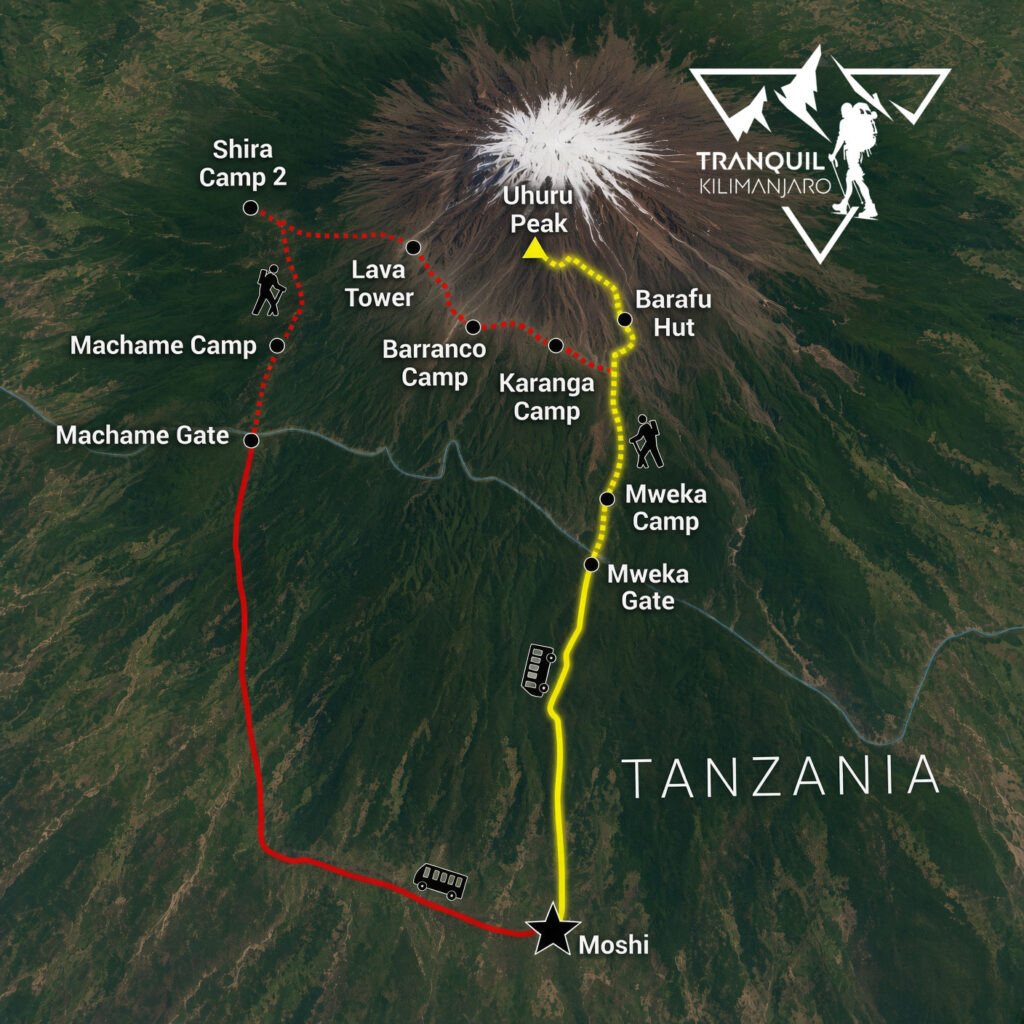
There are only two routes used to descend from Mount Kilimanjaro, and Mweka is one of them. The other descent route is the Marangu Route, which is not natively a descent route as it is used to climb up Kilimanjaro by two of the 7 ascent routes, Marangu and Rongai. After standing on the summit of Mount Kilimanjaro, almost every climber takes the Mweka Route back down. It is the standard, official, well-established path that leads from the high slopes of Kibo all the way to Mweka Gate. Whether you climbed via Lemosho, Machame, Umbwe, or the Northern Circuit, your journey ends on this trail.
- Distance: Approx. 15- 17 km Descent
- Duration: 1.5 – 2 Days
- Starting Point: Uhuru Peak / Barafu Camp
- Ending point: Mweka gate (1,640m)
- Used by: Climbers on Machame, Lemosho, Umbwe & Northern Circuit routes
Kilimanjaro Ascent Routes using Mweka to climb down Kilimanjaro
The Mweka Route is the final chapter of almost every successful Kilimanjaro summit. If you are planning a climb and want a clear understanding of the full journey — including the descent — we can help you choose the right ascent route and prepare properly.
Ready to climb Kilimanjaro and descend via the Mweka Route?
All our climbs that use the Mweka descent include experienced guides, quality equipment, and full support.
Or
What Our Climbers Say
Discover experiences and reviews from our adventurous guests.


The most commonly used and safest way down Mount Kilimanjaro after summiting
The Mweka Route has become the default way down the mountain for good reasons. The path is clearly marked, regularly maintained, and designed for a steady loss of altitude. It avoids the more crowded or steeper alternatives and brings you directly to the gate where summit certificates are issued. Most operators prefer it because it offers a reliable and relatively straightforward descent after the physical effort of reaching the top.
Descent Itinerary Overview
Summit Day – Uhuru Peak to Mweka Camp
You leave the summit in the early morning and begin the long walk down. The first section drops steeply across scree before the trail becomes more manageable.
Most groups reach Mweka Camp (around 3,100 m) in the afternoon, tired but relieved.
Final Day – Mweka Camp to Mweka Gate
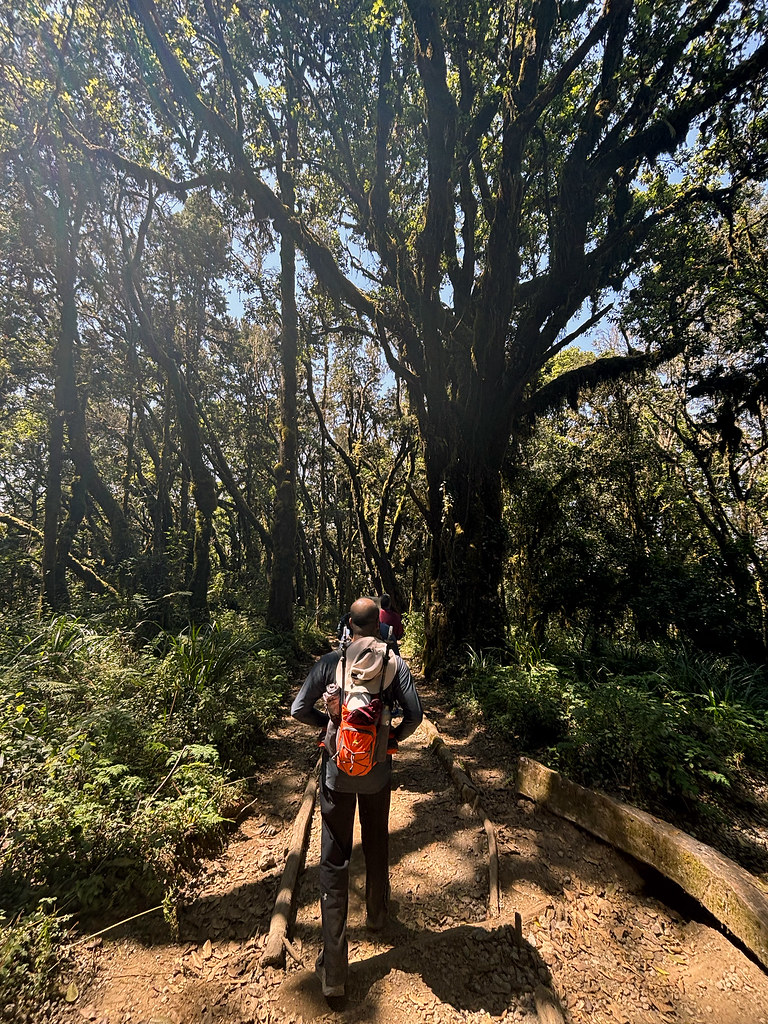
After breakfast, you continue downhill through the rainforest. The path is softer underfoot and the air feels warmer and thicker. You usually arrive at Mweka Gate by late morning or early afternoon, collect your certificate, and meet your transfer back to Moshi or Aru
What the Descent Feels Like
The upper part of the Mweka Route is often the hardest on tired legs. The scree can be loose, and the drop in altitude is rapid. Once you pass Millennium Camp and enter the moorland, the gradient eases. By the time you reach the rainforest, the walking becomes more pleasant, though the path can be muddy after rain.
Trekking poles make a noticeable difference, especially on the steeper sections. Many climbers say the descent tests the knees more than the ascent tests the lungs.
Practical Tips for the Descent
Use trekking poles from the moment you leave the summit.
Take your time on the scree – rushing increases the chance of slips.
Keep layers accessible; the temperature rises quickly as you lose height.
Watch your footing in the rainforest, especially if the path is wet.
Celebrate at the gate, but remember the journey is only complete once you are safely in the vehicle.
Why the Mweka Route?
Or